



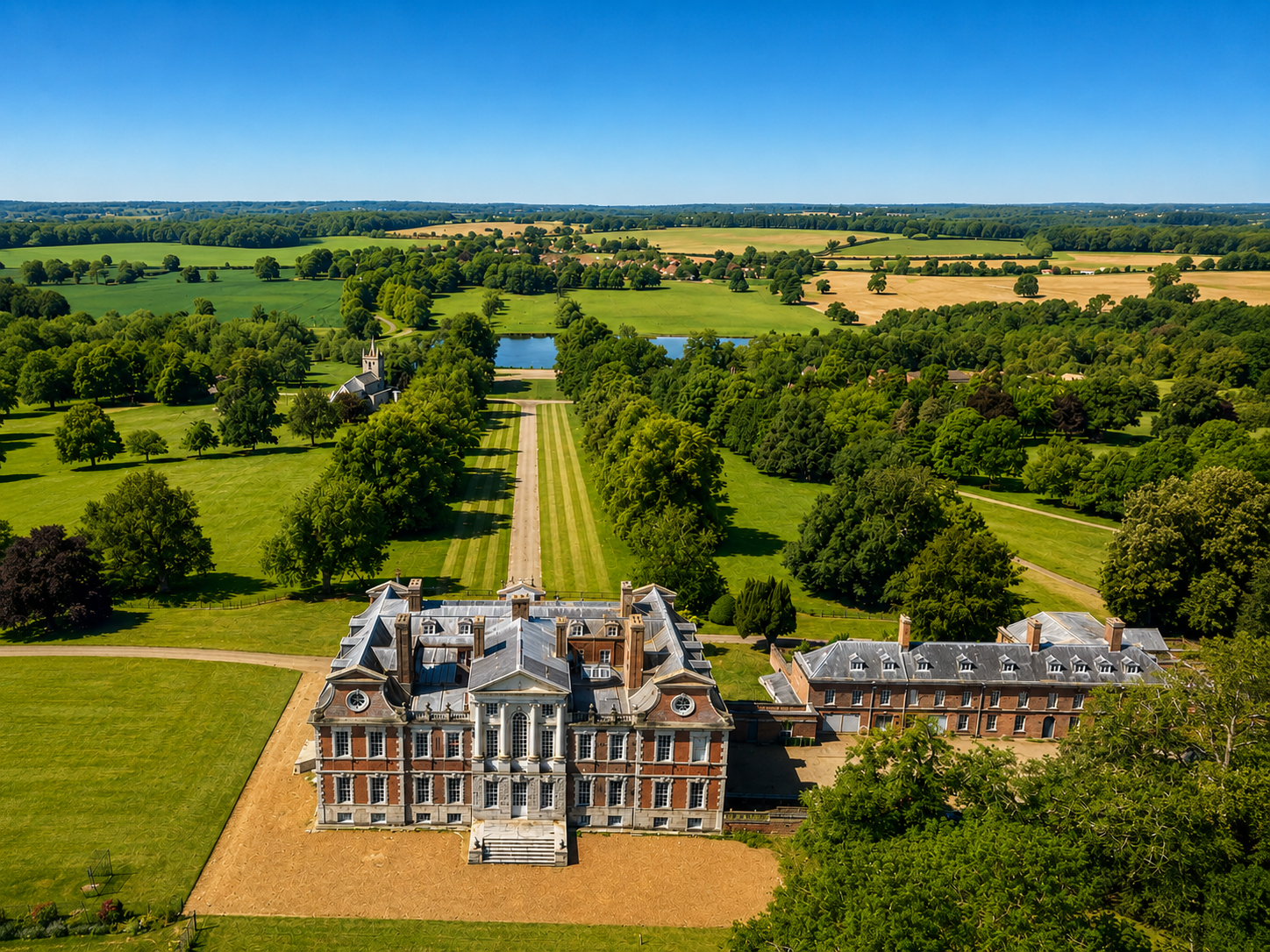
Raynham Hall is one of Norfolk’s most fascinating country houses, combining centuries of history, remarkable architecture and the enduring story of the Townshend family. Set in the village of East Raynham, near Fakenham, the Grade I listed house has been the ancestral home of the family for almost 400 years and remains an important part of Norfolk’s architectural heritage.
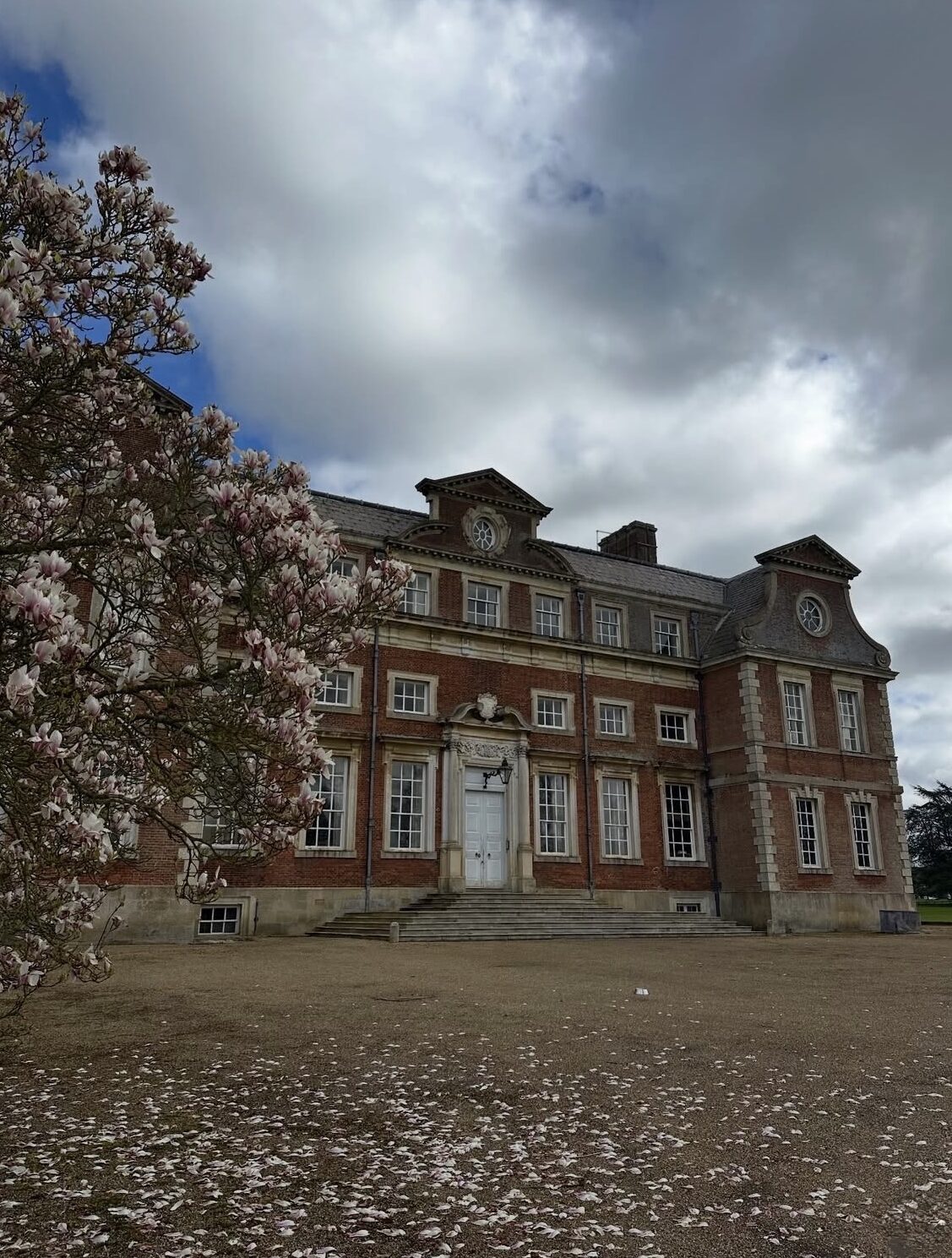
Construction of the present house began in 1619 when Sir Roger Townshend set out to create something rather different from the traditional Tudor houses of the period. Influenced by classical architecture and designs he had encountered in the Low Countries, Townshend worked with master mason William Edge to create a building that introduced a more formal and symmetrical style to the English country house.
The result was a striking combination of early classical and Dutch influences. Its distinctive Dutch gables, symmetrical proportions, Ionic columns and impressive Venetian window helped establish Raynham Hall as a pioneering example of the architectural changes taking place in England during the early 17th century.
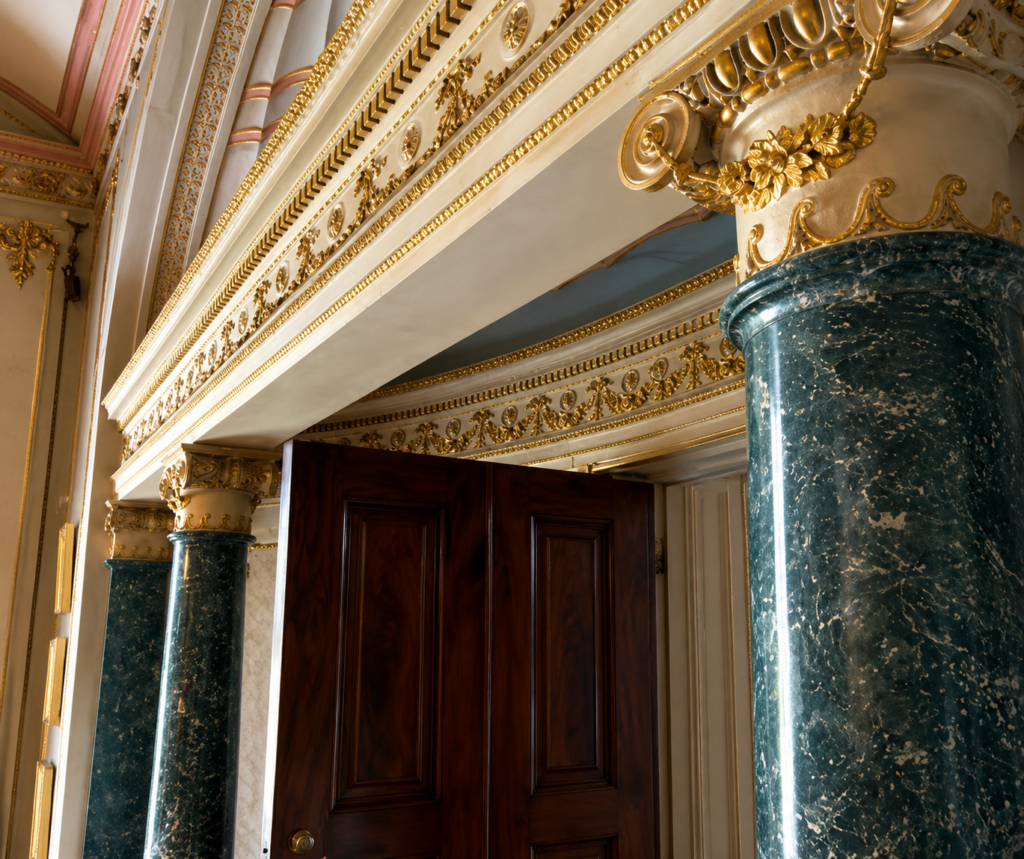
The house continued to evolve over the generations. One of its most significant transformations came in the early 18th century when Charles Townshend, the 2nd Viscount Townshend, commissioned architect and designer William Kent to remodel parts of the interior.
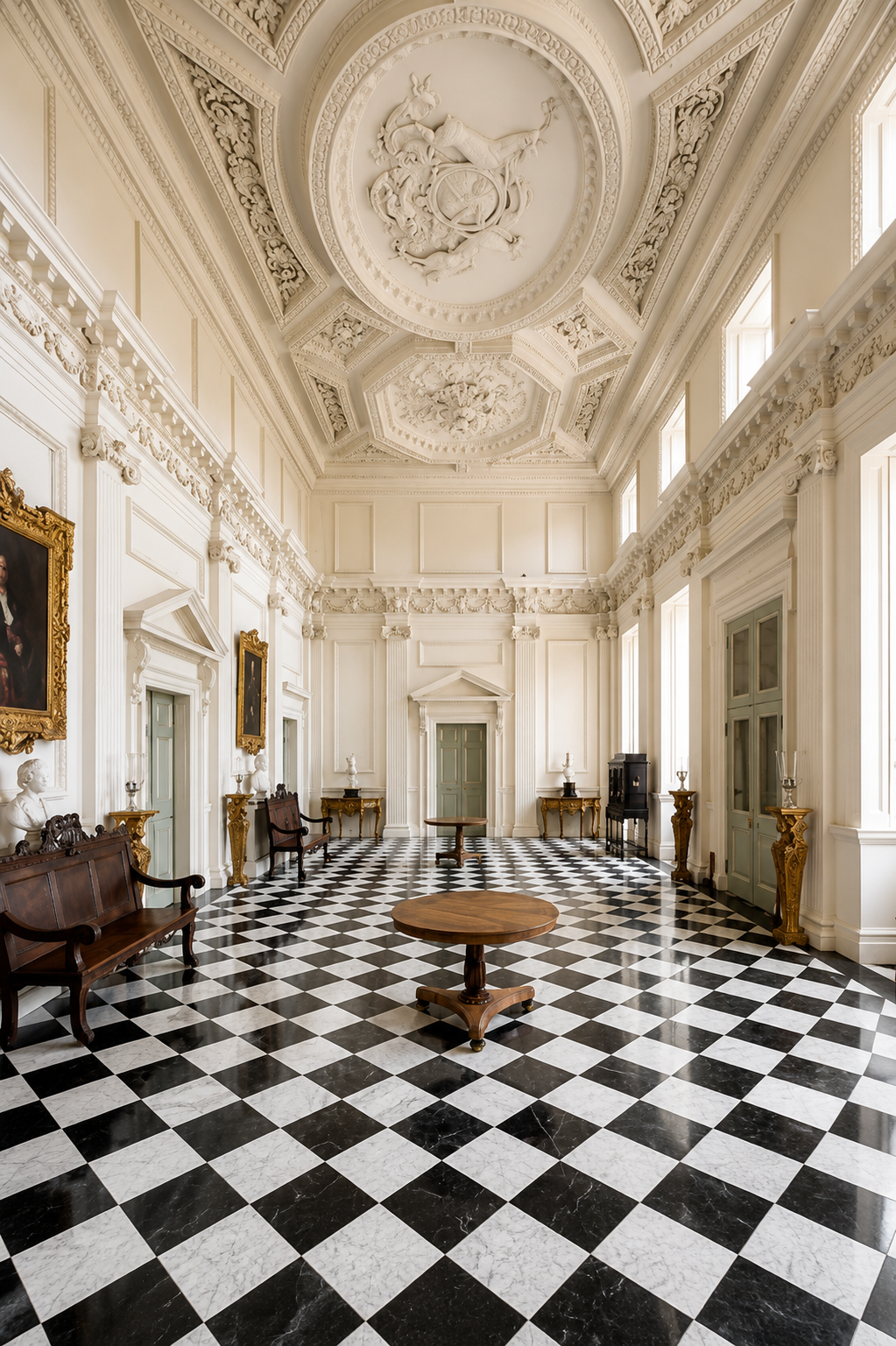
Kent was one of the leading figures of the Georgian period, and his work at Raynham helped create some of the house’s most memorable spaces. Among them is the spectacular double-height Marble Hall, where black and white marble creates a dramatic sense of scale. The sweeping cantilevered staircase, which features hand-painted decoration, is another standout detail, while the richly decorated Red Saloon adds further grandeur to the interiors.
Raynham’s connection with William Kent also extends beyond the house itself. Elements of his designs at Raynham were later reused elsewhere, including at Kensington Palace, demonstrating the influence that the house and its interiors had on the development of English Georgian design.
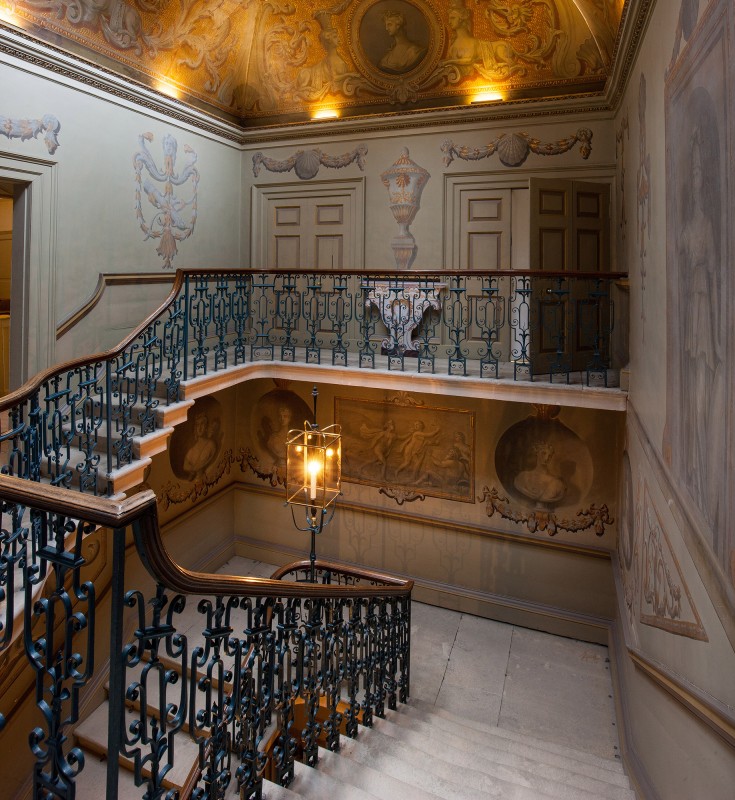
The Townshend family has played an important role in both Norfolk and British history. Charles Townshend, 2nd Viscount Townshend, is particularly remembered for his contribution to agricultural development. Often known as Turnip Townshend, he became associated with innovations in crop rotation that helped transform farming practices in Britain.
Raynham Hall has also welcomed figures from the highest levels of society. King Charles II visited the house in 1671, and royal connections remain part of its heritage, with furnishings and portraits associated with the period forming part of the historic interiors.
Beyond its architectural and political history, Raynham Hall has gained an entirely different kind of fame thanks to one of Norfolk’s most enduring ghost stories.
The house is famously associated with the Brown Lady, a supposed apparition said to haunt its corridors and staircases. The story became particularly well known after a photograph published in Country Life magazine in 1936 appeared to show a mysterious figure descending the staircase. The image has become one of the most famous alleged ghost photographs in history, adding an intriguing layer to the already remarkable story of Raynham Hall.
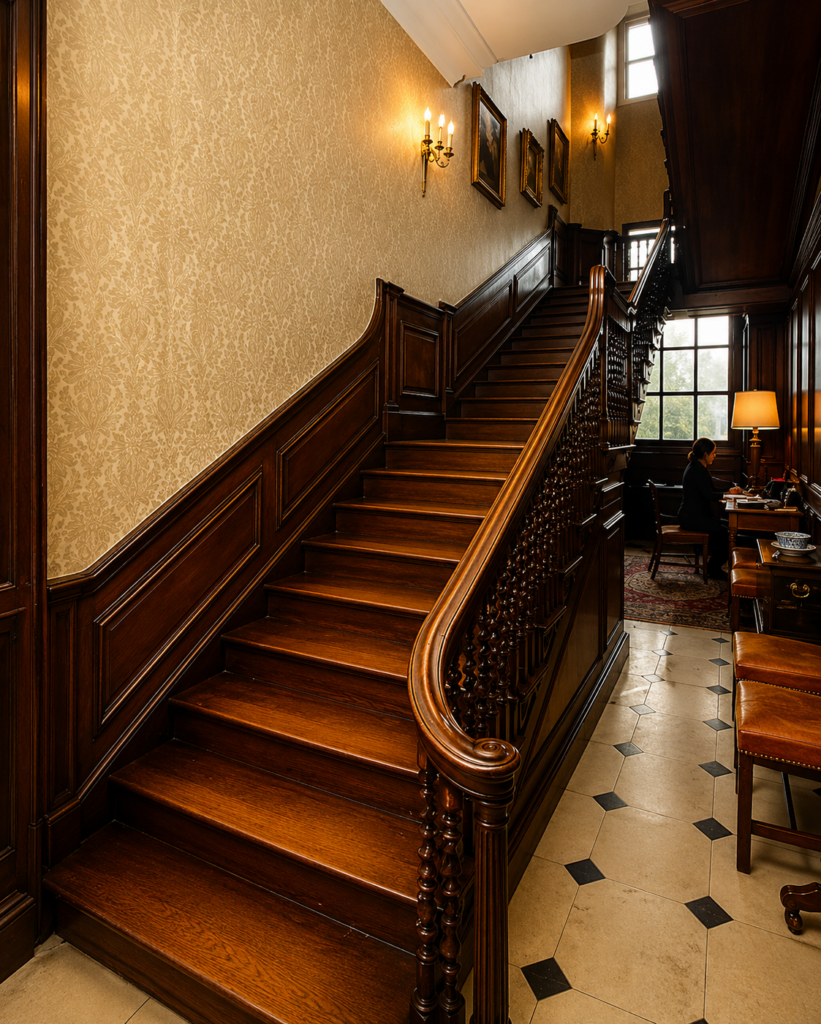
For visitors interested in Norfolk’s heritage, the appeal of Raynham lies in the combination of these different stories. It is not simply an impressive country house, but a place where architectural change, family history, agriculture, royal connections and folklore come together.
The surrounding Raynham Estate also forms an important part of the wider landscape. Today, the estate has developed a number of experiences and activities, including glamping, dining, events and estate produce, offering visitors another way to experience this part of Norfolk.
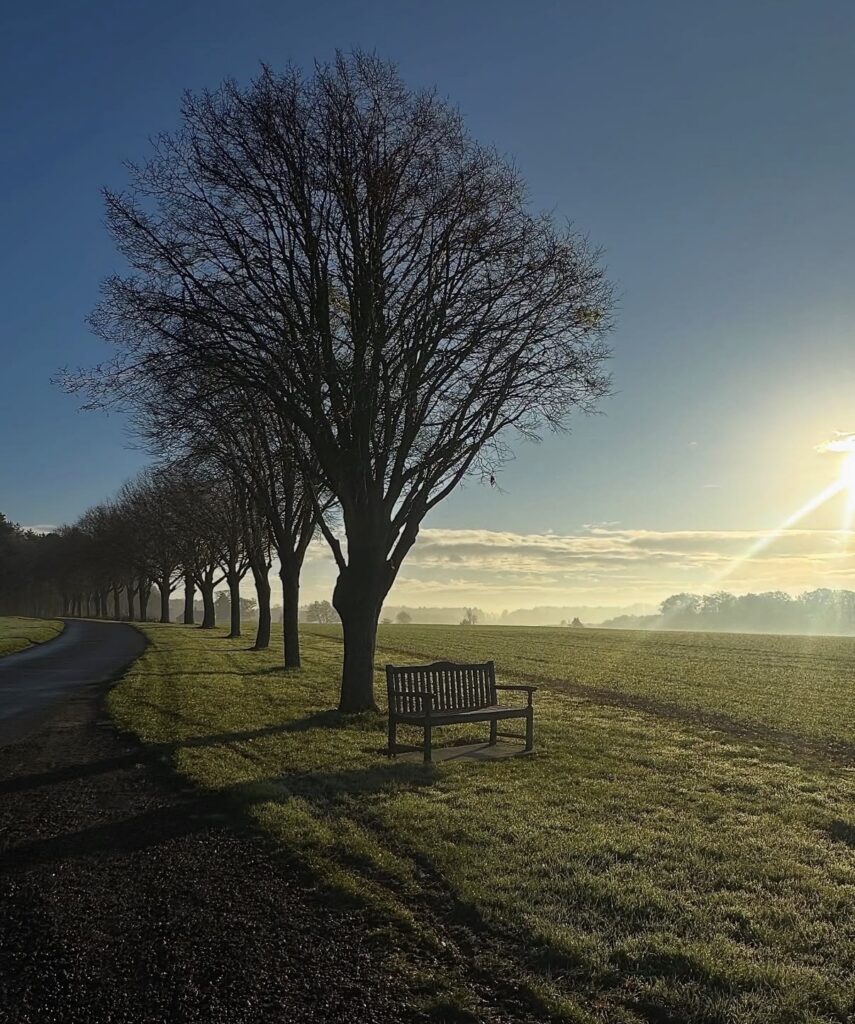
Raynham Hall continues to stand as a reminder of how dramatically the English country house evolved over the centuries. From Sir Roger Townshend’s pioneering early classical design to William Kent’s Georgian transformation, its architecture reflects changing tastes, ambitions and ideas.
With its distinctive exterior, remarkable interiors and fascinating history, Raynham Hall remains one of Norfolk’s most intriguing historic houses. Whether it is the architecture that draws you in, the Townshend family story or the mystery surrounding the Brown Lady, there is plenty to discover within this extraordinary corner of the Norfolk countryside.
Location: East Raynham, Fakenham, Norfolk, NR21 7EE