



Across West Norfolk something quietly powerful is happening. An energy‑efficiency initiative has been making a real difference for people and homes, helping lower bills, improve comfort, and bring greater peace of mind to many households. It is a story of small transformations adding up to meaningful change.
In recent years West Norfolk Council has been working alongside national schemes to deliver the Energy Company Obligation 4 programme. Under this scheme energy suppliers are obliged to fund improvements in domestic homes, particularly for those in greatest need. Eligibility is focused on homes with low energy performance as well as households on low incomes or with health vulnerabilities.
What is striking is how many homes in the area are already benefitting. The council has issued hundreds of declarations of eligibility that open the door to fully funded retrofits. For many residents, that means upgrades without the burden of cost. Turning old, leaky houses into warmer, more efficient homes.
Take older houses, perhaps under‑insulated, with high heating costs. Under this scheme such homes can be refurbished insulation can be added, heating systems replaced, solar panels installed where suitable. The aim is to bring homes up to a better energy performance rating and reduce energy wastage.
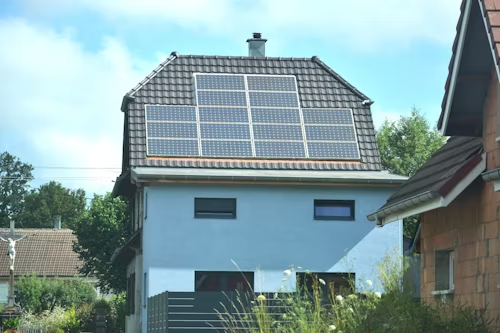
The results are tangible. Homes that once struggled to stay warm are now more consistent in temperature. Rooms no longer swing between cold and hot extremes. Heating bills are lower. The more efficient homes also reduce carbon emissions, contributing to the region’s climate goals.
For many residents, the impact goes beyond the financial. Having a home that holds heat, that does not leak energy, creates a sense of stability. It helps with health, especially for those more vulnerable to cold. It reduces stress about mounting bills in winter. And it brings dignity: the sense that your home works well and is safe, efficient, and comfortable.
One council statistic underlines how demand is strong. As of a certain point, over 500 declarations had been issued across West Norfolk for homes to participate in the scheme. Among those, many households have already seen work completed and are feeling the difference.
In addition to the core ECO4 programme there is a local grant round now available under a scheme called Warm Homes: Local Grants. That initiative brings similar improvements insulation, heating upgrades, solar systems to households that might otherwise miss out. This layered approach helps ensure more people can access the benefits.
West Norfolk is also notable in national statistics for its uptake of heat pumps. In the broader region, the local authority is among the highest in the East with heat pump installations in properties. That signals ambition and momentum: the area is already pushing toward cleaner, more efficient home heating.
This scheme matters especially in rural areas where fuel poverty is often deeper and homes older. For those in more remote communities, energy costs are a heavier burden. The fact that help is reaching these households is a positive step.
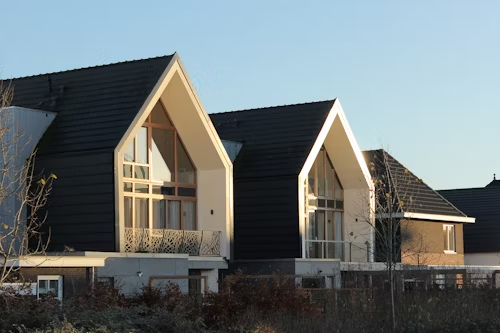
Visiting one of the households that has completed work, one sees the difference in everyday life. Radiators replaced, better insulation, a more efficient heating system. The house is warmer in winter, quieter, more comfortable. That kind of practical difference is exactly what the scheme aims to achieve.
From the perspective of the county or borough council, acting as the facilitator is important. The council serves as the local intermediary: it raises awareness, issues the eligibility declarations, helps residents navigate the scheme, and ensures that quality standards are met. That role gives people confidence that the process is legitimate and safe.
The scheme is designed to run until March 2026 under current terms. But its legacy could extend far beyond that. Once homes are upgraded, their performance improvements persist. Householders will continue to benefit from lower energy use, lower carbon emissions, and greater comfort for years to come.
One of the greatest strengths is that participants do not pay for the work themselves. The cost is borne by the energy companies, fulfilling their obligation under the national scheme. That approach removes a major hurdle for households that would never afford retrofit work on their own.
To see this as an ordinary grant scheme is misleading. It is an opportunity for genuine change to be delivered at scale. For individual householders it means practical support, improved living conditions, and relief from high costs. For the community it means a more energy resilient region, lower emissions, and progress toward climate targets.
If you live in West Norfolk and suspect your home might qualify, check your eligibility through the council’s pages or local housing standards department. Many people are not aware they qualify until they investigate.
This energy‑efficiency scheme is not a flashy headline effort. It is a solid quietly transformative programme that is already improving lives in our region. In homes across West Norfolk, comfort is rising, bills are dropping, and the future feels a little more secure.
Location: West Norfolk (King’s Lynn & West Norfolk)
More information / eligibility: West Norfolk Council – Funded Energy Efficiency Improvements