



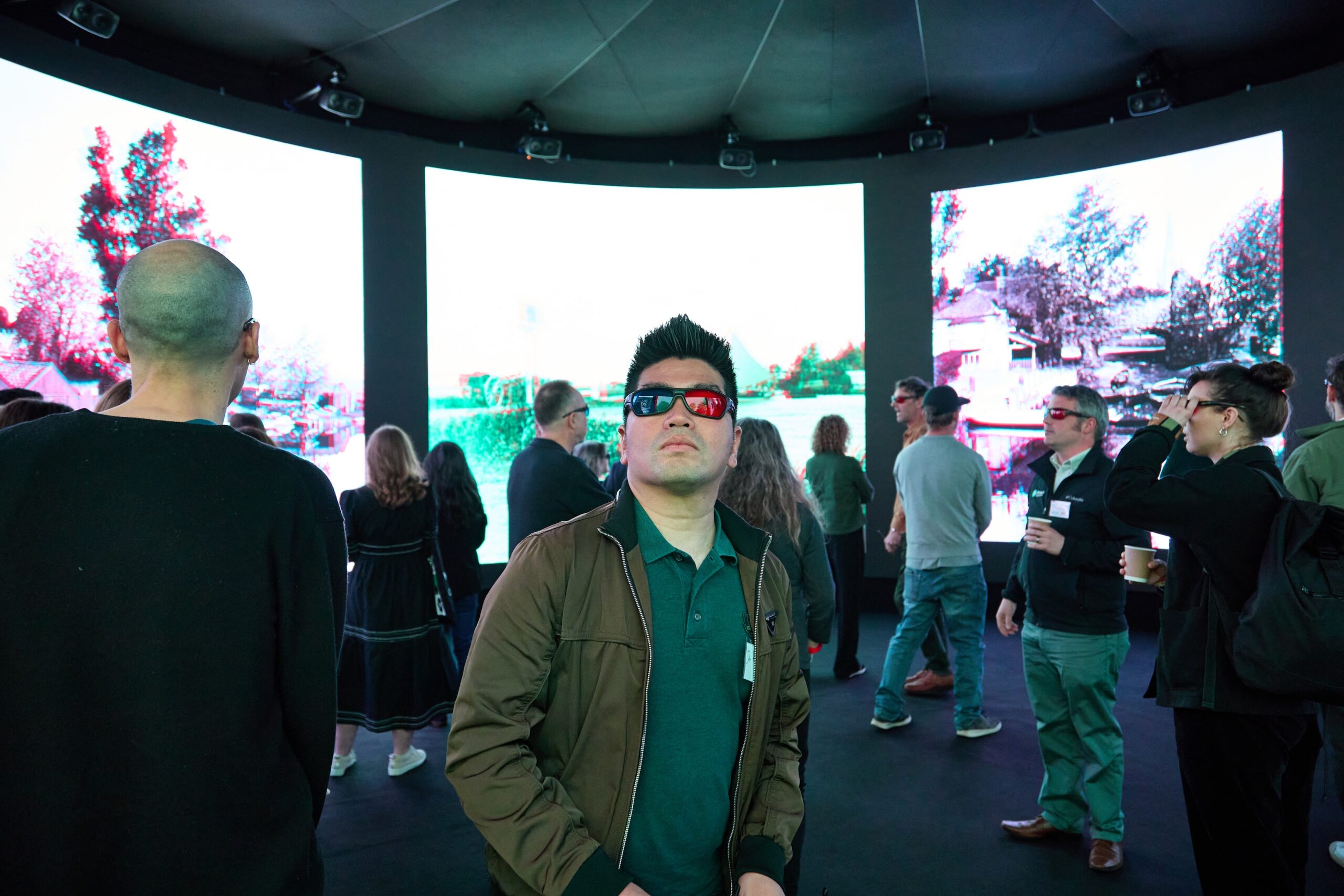
Innovation and creativity have always been at the heart of Norwich’s cultural identity, but this autumn the city took a major step forward with the launch of the state-of-the-art Immersive Visualisation and Simulation Lab at Norwich University of the Arts (NUA). The new facility marks an exciting turning point for Norfolk’s growing digital sector, bringing together art, technology, and enterprise in one forward-thinking space.
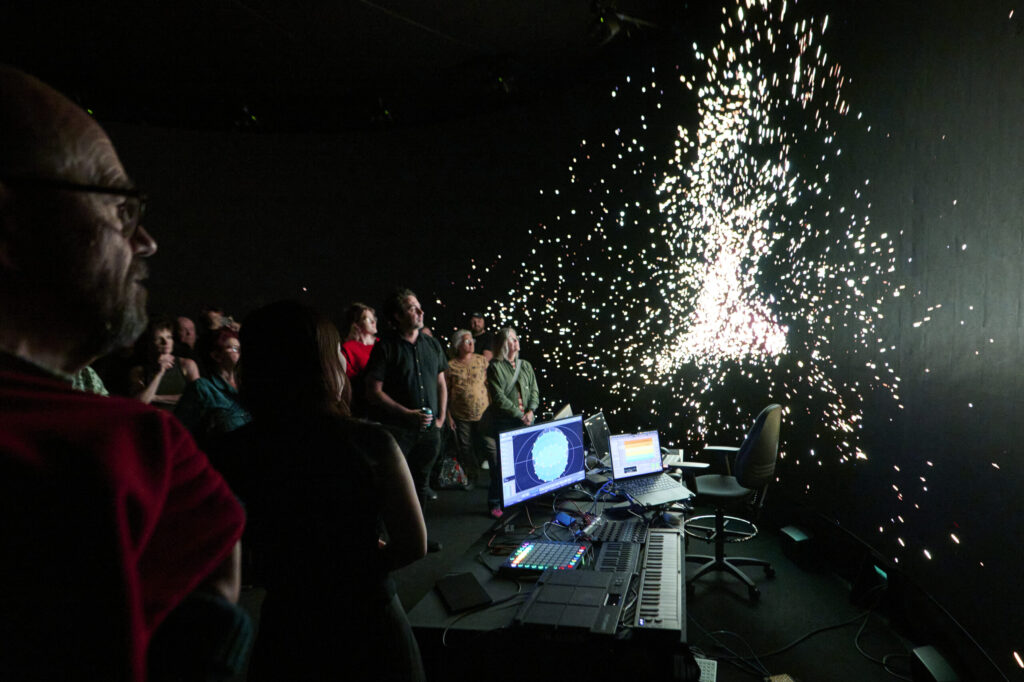
The Immersive Lab is part of a county-wide investment in innovation supported by Norfolk County Council’s Growth and Investment Action Plan 2024–29. It features a full 360-degree LED volume stage, motion capture technology and mixed-reality development spaces. Until recently, equipment of this calibre could only be found in large-scale film and gaming studios in major cities, but now, right in the centre of Norwich, students, researchers, and local businesses can access world-class facilities for digital content production, training simulations, and creative research.
The facility has been designed not only as a teaching environment but also as a collaborative hub that connects academia with industry. By integrating advanced imaging and simulation tools into courses and research projects, NUA aims to empower the next generation of digital creatives while supporting regional businesses in adopting immersive technologies. The university sees this as a bridge between creativity and commerce, where graduates will gain the experience needed to work on an international level, and local companies can explore new ways to innovate and train their teams.
The investment fits closely with Norfolk County Council’s vision of positioning the county as a centre of excellence for creative technology and digital production. It forms part of a broader strategy that includes improved broadband infrastructure, skills development, and sustainable growth initiatives designed to attract inward investment. The Council’s Economic Development team views hubs like the NUA Lab as essential in creating high-value employment and helping to retain talent within the region.
Interest in the facility has already grown among the creative industries. Independent filmmakers, gaming studios, and digital agencies have begun exploring collaborations with NUA, with pilot projects under discussion involving virtual set design, training environments for healthcare professionals, and immersive storytelling experiences that combine heritage and digital art. For Norwich’s creative economy, already known for its thriving design and media sectors, the Immersive Lab is another strong reason to celebrate.
The launch of this facility also highlights how technology is transforming education. Rather than focusing on software training alone, the Immersive Lab encourages collaboration across disciplines. Animation students can work alongside fine artists and sound designers, while computing and film students can use volumetric capture to bring virtual environments to life. The result is an education model that balances technical expertise with creative vision, a balance long associated with Norwich’s artistic identity.
Beyond education, the benefits extend across Norfolk’s economy. Regional firms in manufacturing, healthcare, tourism, and heritage are expressing interest in using the space for virtual product development, safety training, and digital visitor experiences. One local engineering company is exploring immersive simulation to improve workforce safety, while a tourism operator is assessing how virtual reality storytelling could help share Norfolk’s heritage with global audiences.
There are environmental advantages too. Immersive simulation can reduce the need for travel, materials, and energy in training or design testing, aligning the initiative with the county’s sustainability goals. By integrating digital innovation with responsible practice, the facility demonstrates that technology can play a significant role in advancing both progress and environmental awareness.
The investment also delivers a clear message to young people in Norfolk. The county has sometimes struggled to retain creative graduates who often leave for opportunities in larger cities. The Immersive Lab offers a new reason to stay by providing cutting-edge facilities and strong links to industry right here in the region. Students can now access the same standard of technology they would find in major studios while contributing to the growth of their local economy.
For Norwich, the opening of the Immersive Lab reinforces the city’s identity as a place where art and innovation thrive side by side. From its history in textiles and publishing to its modern strengths in digital design and cultural enterprise, Norwich continues to evolve as a leader in creative development. The opening event, attended by educators, policymakers, and business leaders, reflected this spirit of collaboration and shared ambition.
The arrival of this facility comes at a time when immersive technology is becoming integral to how people learn, create, and communicate. By embedding this expertise locally, Norfolk is ensuring it stays at the forefront of this transformation. The Immersive Visualisation and Simulation Lab may have opened quietly, but its impact is set to be significant for the city, the university, and the wider county.
As students, researchers, and businesses begin to explore the space, one thing is certain: Norfolk is emerging as a dynamic environment for digital innovation. Through visionary investment, skilled educators, and community collaboration, the county is proving that its future is as bright and bold as the immersive screens that now light up the heart of Norwich.
Learn more here: https://www.norfolk.gov.uk/article/73665/Norfolk-makes-early-strides-towards-its-long-term-economic-ambitions